

GUEST BLOG: Clinical Laboratory Testing Is Essential to Patient-Centered Healthcare
By: Laura Stevens Kent, Senior Vice President, Government Affairs and Policy, American Clinical Laboratory Association (ACLA), and Nancy Carlton, Federal and Alliance Affairs, Roche Diagnostics Corporation
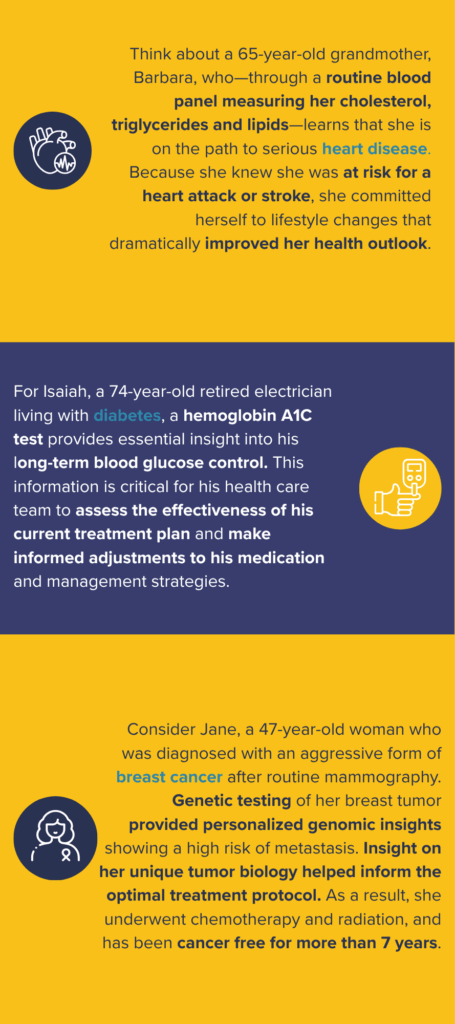
For millions of Americans, clinical laboratory test results can be the first indicator of a health issue and serve as the “GPS” for guiding increasingly personalized patient care.
Clinical laboratory testing is foundational to health care, informing 70% of all medical decisions for patients in the U.S. Every day, laboratories provide critical information that helps patients understand their health status and clinicians diagnose diseases, guide treatment decisions, monitor chronic conditions, and prevent serious complications before they become life threatening. Despite the importance of laboratory testing to patients and providers, access to timely laboratory services is at risk.
The Ongoing Threat to Laboratory Testing
In 2014, Congress enacted the Protecting Access to Medicare Act (PAMA) requiring Medicare payments for laboratory tests to be based on the rates that private insurers pay. However, the commercial market data used to set those rates came from less than 1% of laboratories and failed to represent different types of laboratories. The net result has been 3 years of significant payment reductions to laboratories far in excess of what Congress’s scorekeeper projected would take place over 10 years.
Without Congressional action, payment for 820 tests, from routine bloodwork to innovative genetic testing, will be subject to cuts of up to 15% on January 1, 2026.
These cuts could compromise patient access to clinical laboratory tests, delay diagnoses, disrupt monitoring of ongoing health conditions, and reduce investment in life-saving innovative diagnostics.
The Importance of Laboratory Testing & The Impact of Cuts on Patients Access
- Cancer: Each year, more than 1.9 million Americans are diagnosed with cancer, with 59% of cases in people 65 or older. Laboratory tests like complete blood counts, metabolic panels, and genetic testing guide diagnosis, treatment planning, and monitoring. Yet in 2026, numerous cancer tests, including BRCA and hereditary colon–cancer diagnostics, will face cuts by up to 15%. In 2023, Medicare patients alone received more than 100,000 such tests.
- Cardiovascular Diseases: Heart disease remains the leading cause of death in the U.S., and laboratory tests like lipid panels, biomarkers, and coagulation studies are critical for diagnosis, risk assessment, and treatment monitoring. Still, these commonly ordered tests will also face cuts by up to 15% in 2026. In 2023, over 58 million cardiovascular tests were ordered through Medicare.
- Diabetes: More than 38 million Americans live with diabetes, including 30% of seniors. Routine laboratory monitoring, including hemoglobin A1C, lipid panels, and kidney function tests, is essential to preventing life-threatening complications. But A1C testing, a cornerstone of diabetes care, will face a 12% cut in 2026. In 2023, Medicare beneficiaries alone received more than 36 million A1C tests.
The Path Forward
The RESULTS Act (H.R. 5269/S. 2761) is a new, common-sense policy solution–both bipartisan and bicameral–that would put the Medicare payment system for clinical laboratories on firm footing and mitigate destabilizing payment cuts.
The RESULTS Act is needed now. Congress must prevent another round of cuts that could jeopardize access to clinical laboratory services for millions of Americans and imperil investments in the next generation of innovative diagnostics for personalized patient care.
The Stop Lab Cuts campaign, led by the American Clinical Laboratory Association (ACLA), provides patients, providers, and advocates with data and tools to urge Congress to take action in support of RESULTS. To learn more, or to contact your representatives, visit StopLabCuts.org.
About the American Clinical Laboratory Association (ACLA)
ACLA is the national trade association representing leading laboratories that deliver essential diagnostic health information to patients and providers by advocating for policies that expand access to the highest quality clinical laboratory services, improve patient outcomes, and advance the next generation of personalized care.
About Roche
Founded in 1896 in Basel, Switzerland, as one of the first industrial manufacturers of branded medicines, Roche has grown into the world’s largest biotechnology company and the global leader in in-vitro diagnostics. The company pursues scientific excellence to discover and develop medicines and diagnostics for improving and saving the lives of people around the world. We are a pioneer in personalized healthcare and want to further transform how healthcare is delivered to have an even greater impact. To provide the best care for each person we partner with many stakeholders and combine our strengths in Diagnostics and Pharma with data insights from the clinical practice.
For over 125 years, sustainability has been an integral part of Roche’s business. As a science-driven company, our greatest contribution to society is developing innovative medicines and diagnostics that help people live healthier lives. Roche is committed to the Science Based Targets initiative and the Sustainable Markets Initiative to achieve net zero by 2045.
Genentech, in the United States, is a wholly owned member of the Roche Group. Roche is the majority shareholder in Chugai Pharmaceutical, Japan.
For more information, please visit www.roche.com.
Roche Diagnostics is a member of the National Health Council. See our full list of members here.