Inside the 2025 Washington Representatives Retreat: Challenges, Opportunities, and What Comes Next
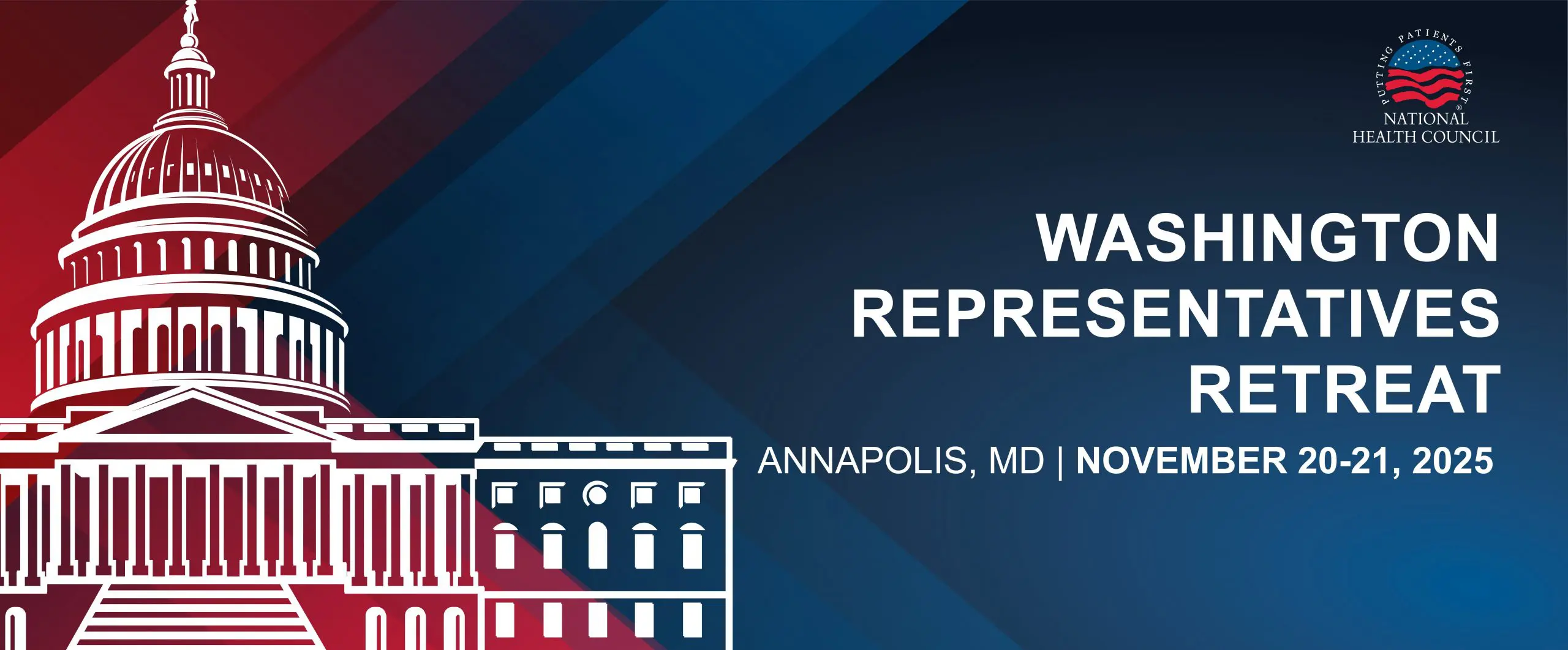
More than 140 policy and advocacy professionals from across the National Health Council’s membership gathered in Annapolis, Maryland, on November 20–21 for the 2025 Washington Representatives Retreat, setting a record for attendance. The Retreat provided space for stepping back from the pace of day-to-day advocacy to assess the shifting federal landscape, compare strategies, and prepare for the health policy decisions ahead.
A central thread throughout the Retreat was the rollout of the One Big Beautiful Bill Act (OBBBA) and its sweeping implications for Medicaid, the health care safety net, and the millions of patients who rely on these programs. While many details of implementation have yet to be announced, speakers agreed that the law will have far-reaching effects on Medicaid coverage, enrollment processes, and the stability of the health care safety net. Much of the discussion centered on the need for clear, timely guidance from CMS; the importance of educating patients about new requirements; and the responsibility shared by patient organizations, plans, insurers, and community health centers to prevent unnecessary coverage loss. Speakers also stressed that state-level engagement will be pivotal, as states face significant implementation burdens and will need practical, patient-centered tools and partnerships to navigate them
Over the two days, participants reflected on what effective advocacy looks like in a landscape defined by tight timelines and unpredictable policymaking. Although traditional tools such as comment letters and coalition-driven responses remain valuable, organizations are adapting by leaning more heavily on digital outreach, targeted engagement, and partnerships outside the typical health policy sphere. Several speakers noted that progress often comes in smaller steps in the current climate: preventing harm, securing narrow exemptions, or preserving existing protections can be as significant as advancing new policy. Storytelling, trusted messengers, and clear data continue to play a defining role in influencing both policymakers and the public, particularly as science and public health issues become increasingly politicized.
Medication access and affordability emerged as another major theme, with leaders highlighting both immediate risks and long-standing opportunities. The potential expiration of enhanced premium tax credits threatens to reverse coverage gains that make medication access possible, while ongoing challenges—such as PBM practices, vulnerabilities in the generic drug supply chain, and the implementation of Medicare drug price negotiations—will require coordinated advocacy. Panelists underscored that patient organizations must continue to mobilize constituents and hold policymakers accountable, especially as new programs and regulatory frameworks roll out in 2026.
Looking ahead, speakers pointed to several trends that will shape the next two years: changes for Medicaid beneficiaries under OBBBA; the future of telehealth flexibilities; funding for chronic disease programs; and the emerging intersection of artificial intelligence with patient care, research, and regulatory oversight. With several long-time champions retiring, organizations will need to reach new members early and use district-level data and patient narratives to build durable relationships.
Discussions on litigation and executive authority underscored the volume of legal challenges unfolding across the health care landscape. Experts urged organizations to understand the limits of executive action, seek clarity rather than comply prematurely with nonbinding directives, and partner with legal advocates when policies threaten patient rights or access.
Renée DiResta closed the Retreat with an examination of one of the most difficult challenges facing health organizations today: navigating misinformation and declining public trust. Through research on vaccine narratives and online behavior, DiResta explained how false or misleading information takes hold—and what patient groups can do to communicate effectively in the current environment. The session underscored the value of being consistently present in online conversations, working with credible messengers, and anticipating how different audiences may interpret new policies or scientific developments.
Across all sessions, the Washington Representatives Retreat reinforced the same core message: while the policy landscape is complex, the patient community is not without leverage. By coordinating early, sharing strategies, and keeping patient experiences at the center of every conversation, NHC members are well positioned to shape policy in ways that strengthen access, uphold patient protections, and advance a health system responsive to the real-world needs of the people we serve.