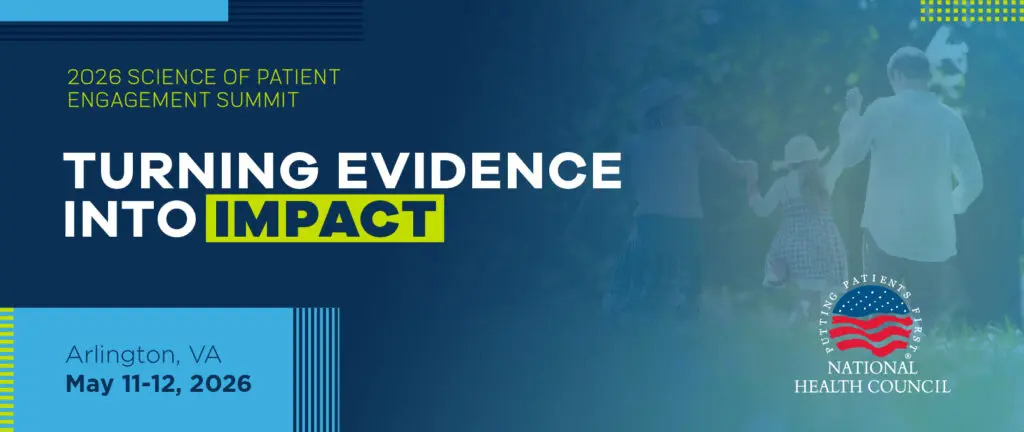
2026 Science of Patient Engagement Summit
- Event Date: May. 11 - 12, 2026
- Event Time: 9:00 a.m. ET - 4:30 p.m. ET
- Event Location: Amazon HQ2, National Landing - Arlington, VA
Home
Schedule
Speakers
Sponsors
What is the Science of Patient Engagement Summit?
Turning Evidence into Impact, the Science of Patient Engagement Summit (Summit) gathers innovators, health system leaders, decision-makers, and the patient community together to explore how patient engagement accelerates better diagnostics, effective treatments, and smarter health system integration.
As health care evolves, success depends on how well solutions work for the people who use them. New tools and care plans that are developed with patients – not for patients – can better generate high-quality data and deliver real-world achievement. Effective patient engagement is a strategic advantage. It improves performance and increases positive health outcomes.
The Summit examines how engaging patients early and meaningfully strengthens health care—from product design and clinical implementation to system-wide adoption in hospitals, clinics, and community health centers.
Why should I attend?
Summit attendees will:
- Understand how patient engagement drives better outcomes and stronger returns.
- Learn how to reduce implementation risk and improve system-wide adoption.
- Connect with leaders shaping the future of diagnostics, treatment, and patient-centered care delivery.
Why Does Patient Engagement Matter?
For investors and health systems alike, patient engagement is no longer a “nice to have.” It directly impacts:
- Treatment Effectiveness: Patients who understand and trust interventions are more likely to adhere to therapies, leading to better outcomes and reduced costs.
- Scalability and Adoption: Products and services that reflect real patient needs are adopted faster and perform better.
- Diagnostics: Engaged patients contribute more reliable data, support earlier detection, and improve uptake of diagnostic tools and screening technologies.
- Health System Integration: Solutions designed with patients integrate more smoothly into hospitals, clinics, and Federally Qualified Health Centers (FQHCs), improving workflow efficiency and staff satisfaction, leading to better clinical outcomes.
- Risk Mitigation: Patient-led design lowers the risk of failed implementation, underutilized technology, and poor market fit.
Who Should Attend?
Health System Leaders: Chief Medical Officers, Chief Nursing Officers, Chief Digital Officers/Chief Innovation Officers, Vice Presidents of Population Health, and Directors of Clinical Operations will:
- Learn how patient-centered strategies improve care delivery, outcomes, and operational efficiency.
- Explore approaches for integrating new tools into hospitals, clinics, and FQHCs.
- Discover practical models for partnering with patients to improve system performance.
Innovators & Industry Leaders: Chief Medical Officers, Chief Patient Officers/Heads of Patient Affairs, Vice Presidents of Clinical Development, Vice Presidents of Market Access, Heads of Digital Health/AI, and Directors of Real-World Evidence/Health Outcomes Research will:
- Understand how patient engagement drives adoption and sustained use of new technologies.
- Learn how to design solutions that meet both user needs and system requirements.
Investors & Sponsors: Managing Directors/Partners, Principals, Heads of Health Care Investments, and Corporate Development Leads will:
- Identify scalable, patient-centered innovation opportunities across diagnostics, treatments, and health care integration.
- Understand how patient engagement reduces adoption risk and accelerates deployment in health systems.
Others who would find value in attending: Patient Organization CEOs/Presidents/Executive Directors, Chief Mission Officers, VPs of Patient Engagement or Programs, and Directors of Research/other research leads; Research & Clinical Trial Principal Investigators, Heads of Clinical Operations, Directors of Clinical Trials, and Outcomes Research Leads; and Policy & Regulatory Leads and Health Policy Advisors.